The Journal · The pillar
What masala chai actually is
Not a flavor, not a latte, not a powder. Masala chai is a method — black tea and whole spices boiled with milk — and the method is the whole point.
By Santhosh Natesan · October 24, 2026 · 5 min read
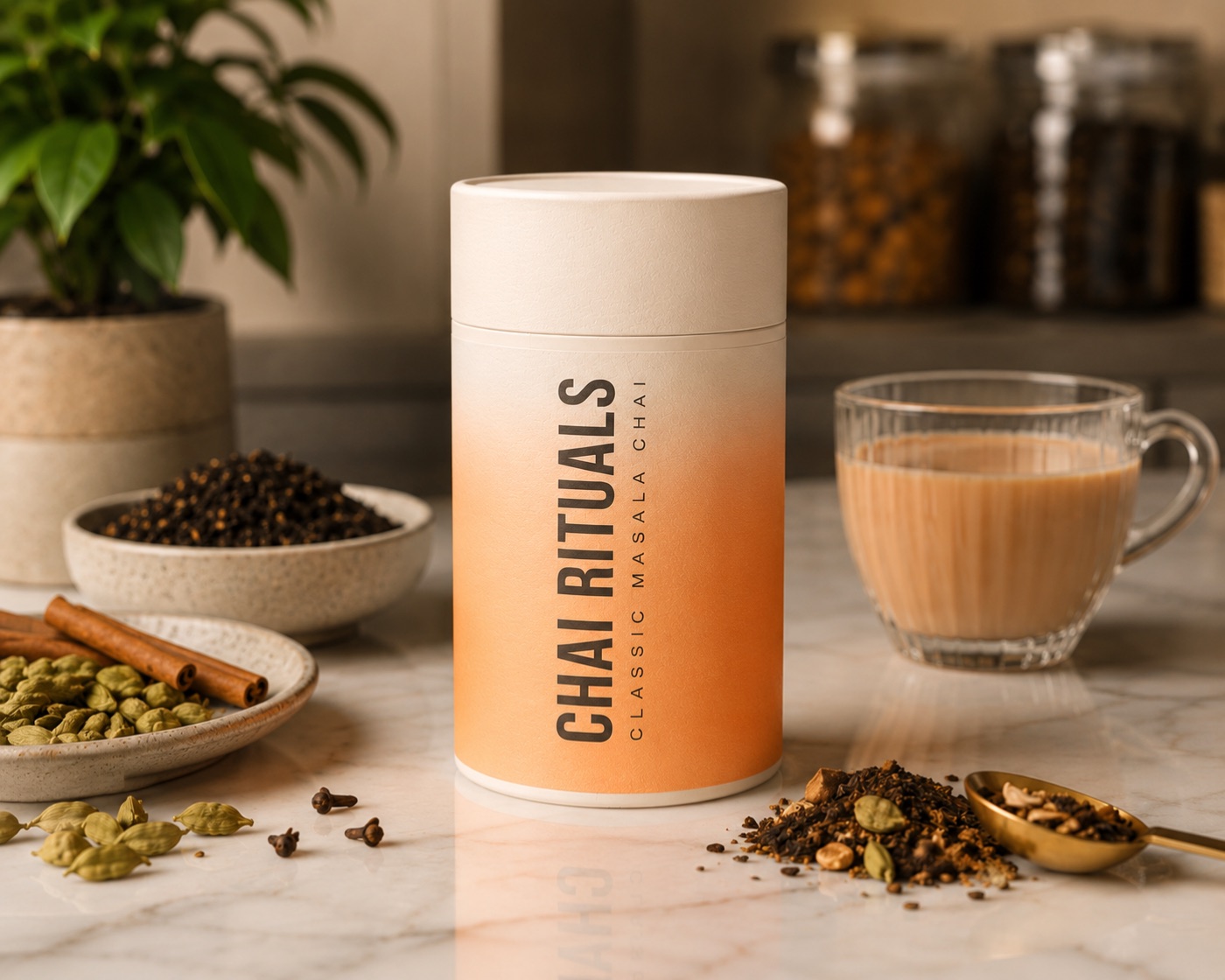
Chai means tea. That is the whole word. When you order a chai tea you have asked for a tea tea, and when a cafe sells you a chai tea latte it is selling you a tea tea milk. This is not pedantry for its own sake — the confusion is exactly why so many people think they dislike chai when what they dislike is a syrup.
Masala chai is the specific thing: masala is the spice blend, chai is the tea. Black tea and whole spices, boiled — not steeped — with milk and sugar. It is a method before it is a recipe, and the method is where nearly everything that matters happens.
Boiled, not steeped
Western tea is an infusion. Hot water sits with leaves for a few minutes, pulls out what it can, and stops. Masala chai is a decoction. The leaf and the spice go into water that is actually boiling and stay there, and then milk goes in and the whole thing boils again.
That difference is not a technicality. Whole spices do not give up much to water at 80 °C for three minutes. Cinnamon bark, green cardamom pods and cloves need sustained heat and time before they release anything beyond a top note. Boiling is how you get the deep, rounded, slightly resinous quality that separates real chai from spiced tea — and it is precisely the step a tea bag in a mug cannot perform.
It is also why the tea itself has to be robust. A delicate first-flush Darjeeling would be destroyed by this treatment. Assam is not: it is malty, tannic and built to stand up to milk and sustained heat. That is why so much chai in India is made with Assam, and why ours is built on it.
The ubaal
There is a step in Indian home kitchens with no English name. Once the milk is in, you bring the pan to a boil and, as the chai climbs the sides, you lift it off the heat and let it fall back. Then you return it. Three times.
This is the ubaal. Each rise pushes the liquid up and through the leaf and spice, and each fall folds it back in. It emulsifies the milk fats with the tea and produces a body you cannot get any other way — the texture that makes good chai feel like it has substance rather than being tea with milk added.
Most recipes written outside India skip this, because it looks like an eccentricity rather than a technique. It is a technique.
What goes in
There is no single authoritative masala. Every household has its own, and regional versions diverge sharply — a Kashmiri kahwa and a Mumbai cutting chai share almost nothing beyond the leaf. What most blends agree on is a small set of warming spices used whole rather than ground.
Ours is six: cinnamon, cardamom, ginger, nutmeg, clove and black pepper, on whole-leaf Assam. We use whole spices because ground spice gives everything up at the start and then has nothing left — it makes a cup that is loud at the start and hollow at the end. Whole spice releases across the whole boil.
Cardamom does most of the aromatic work. Cinnamon rounds it. Ginger and black pepper give it the edge at the back of the throat that makes you want another mouthful. Clove is the one to be careful with — one too many and it takes over completely. Nutmeg sits underneath and you mostly notice it when it is missing.
What it is not
It is not a powder. Much of the chai sold in American cafes arrives as a sweetened concentrate or a spray-dried mix, and both are built for speed and consistency rather than flavor. A powder has already been brewed and dried; there is nothing left in it to extract.
It is not a flavor either. "Chai-flavored" on a label almost always means cinnamon and a little clove, calibrated for people who have never had the real thing. And it is not inherently sweet — sweetness is added in the pan, to taste, and plenty of people take it barely sweetened at all.
How to make it
Two level tablespoons of leaf — about 10 g — into 200 ml of water. Bring it to a boil, then simmer for two minutes, until the water goes deep amber. Add 200 ml of whole milk. Bring it back up and do the ubaal three times. Sweeten in the pan while it is still on the heat — 2 teaspoons of sugar or jaggery for two cups — then strain from a height into the cup.
That makes two cups and takes about eight minutes. The height matters a little — it aerates the chai on the way down and settles the surface.
If it comes out bitter, you boiled the leaf too long before the milk went in. If it comes out thin, you did not boil it long enough, or the milk was skimmed. Neither is a disaster; both are adjustable on the next pot.
Why any of this matters
Because the version most people have tried is not the thing. If your experience of chai is a syrup pumped into steamed milk, you have had something with chai's name on it and none of its method. The actual drink is darker, less sweet, more aromatic and considerably more interesting — and it is eight minutes of work in a saucepan.