The Journal · Craft & method
Chai tea vs chai latte: what the cafe is actually selling you
They are not two versions of one drink. One is tea boiled with spice and milk; the other is usually a sweetened syrup in steamed milk. Here is how to tell, and what to ask for.
By Santhosh Natesan · October 24, 2026 · 4 min read
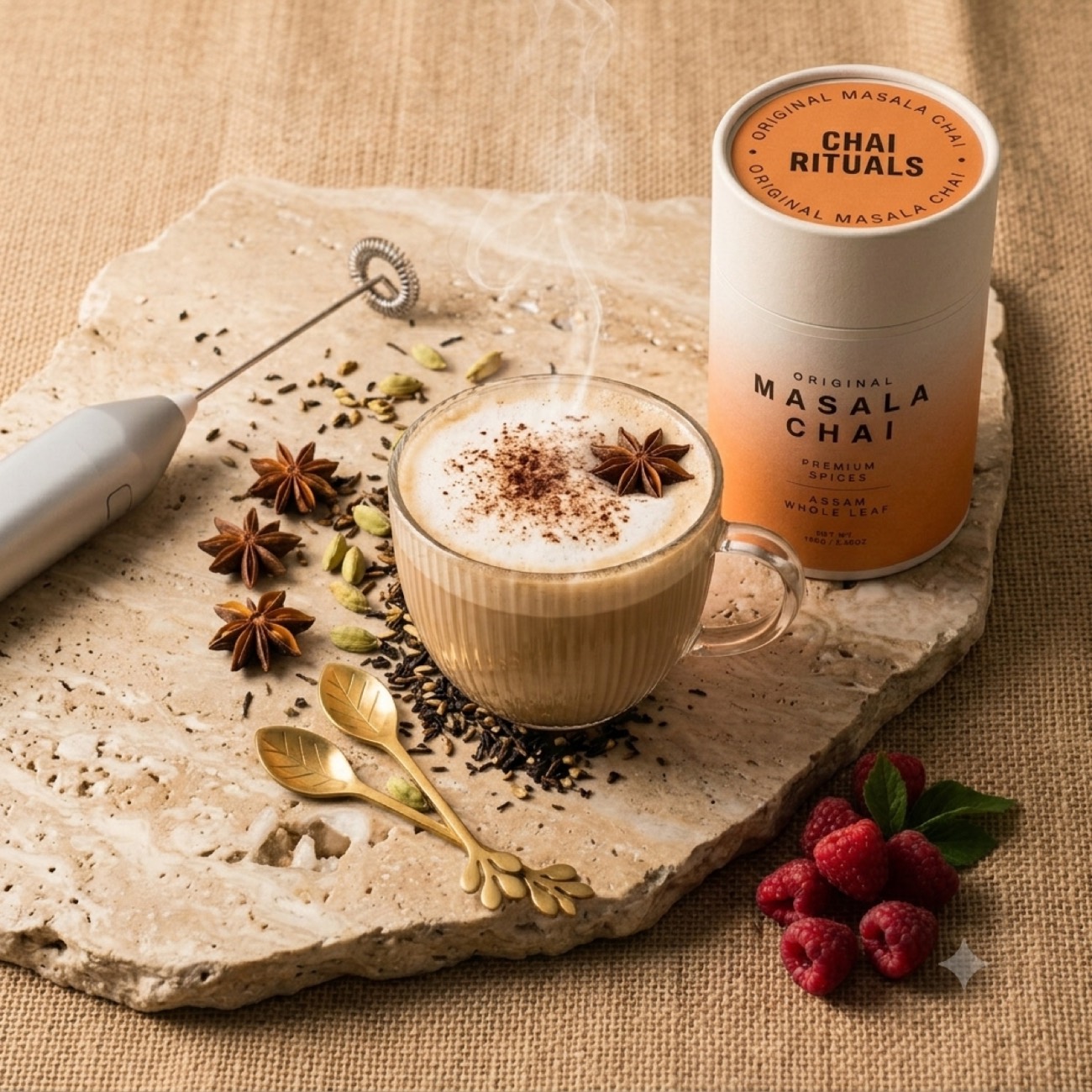
If you have ever had chai in India, or in someone's kitchen, and then ordered a chai latte from a cafe and thought this is not the same drink — you were right. It usually is not.
The difference is not strength or sweetness. It is that one of them is made and the other is dispensed.
The short answer
- Masala chai is black tea and whole spices boiled together with milk in a pan. About eight minutes. The spice is extracted in front of you.
- A chai latte, as most cafes make it, is a pre-made sweetened concentrate or syrup, pumped into steamed milk. Thirty seconds. Nothing is extracted; it was extracted somewhere else, earlier, if at all.
- "Chai tea" is a retail phrase, not a drink. It means tea tea. It is usually printed on a box of bagged spiced tea.
A chai latte can be made properly — a good cafe will brew a real decoction and use it. Most do not, because a syrup pump is consistent and fast and a pan is neither.
How to tell which one you are being handed
You do not need to ask. A few things give it away:
The color
Real masala chai with milk lands somewhere between deep caramel and a warm reddish brown, and it is never uniform — it has depth to it. Syrup-based lattes tend toward a flat, slightly orange beige, the same shade every time.
The sweetness arrives first
In a pan-made chai, sweetness is added last and sits behind the spice. In a syrup drink, sugar is the carrier for everything else, so it hits first and the spice comes after it. If your first impression is sweet rather than aromatic, it came from a bottle.
The finish
Boiled whole spice leaves something at the back of the throat — a little heat from ginger and black pepper that lingers. Syrup finishes clean and slightly cloying, with nothing behind it.
The pump
The most reliable test is watching. If a bottle is involved and no pan is, you know.
Dirty chai, while we are here
A dirty chai is a chai latte with a shot of espresso in it. The name is about the coffee, not the chai — it says nothing about whether the base was made properly. A dirty chai built on syrup is still syrup, now with espresso covering for it. Which, to be fair, it does quite well.
What to ask for in a cafe
The useful question is not "is this real chai" — it puts the barista on the defensive and they often do not know. Ask instead: "Is your chai made from a concentrate or do you brew it?" That is a factual question about their process and most people will answer it straight.
If they brew it, order it. If they use a concentrate, ask whether it is unsweetened — some good ones are, and a cafe using an unsweetened concentrate with real spice is making something respectable. If it is a sweetened syrup, order a coffee.
Making the real one at home is easier than the cafe version
This is the part people do not expect. A chai latte needs a steam wand. Masala chai needs a saucepan and a strainer.
Two level tablespoons of loose leaf — about 10 g — into 200 ml of water. Bring it to a boil, then simmer two minutes until it goes deep amber. Add 200 ml whole milk, bring it back up, and lift it off the heat as it climbs, three times. Sweeten in the pan — 2 teaspoons of sugar or jaggery for two cups. Strain.
Two cups, eight minutes, and you control the sweetness completely — which is the single biggest difference most people notice when they switch.
So which is better?
An honest answer: if you like a sweet, milky, cinnamon-forward drink, a good chai latte is a perfectly nice thing and you should have one. Nobody needs to be talked out of what they enjoy.
But if you have been drinking chai lattes and feeling that something is missing — that it is sweet where you expected aromatic, flat where you expected depth — the thing you are missing is the boil. That is not a product you can buy your way to. It is eight minutes at the stove.