The Journal · Choosing & gifting
Masala chai vs cardamom chai: which one you actually want
One is a full spice blend, the other leads on a single spice. They suit different moments, different milks and different times of day.
By Santhosh Natesan · October 24, 2026 · 3 min read
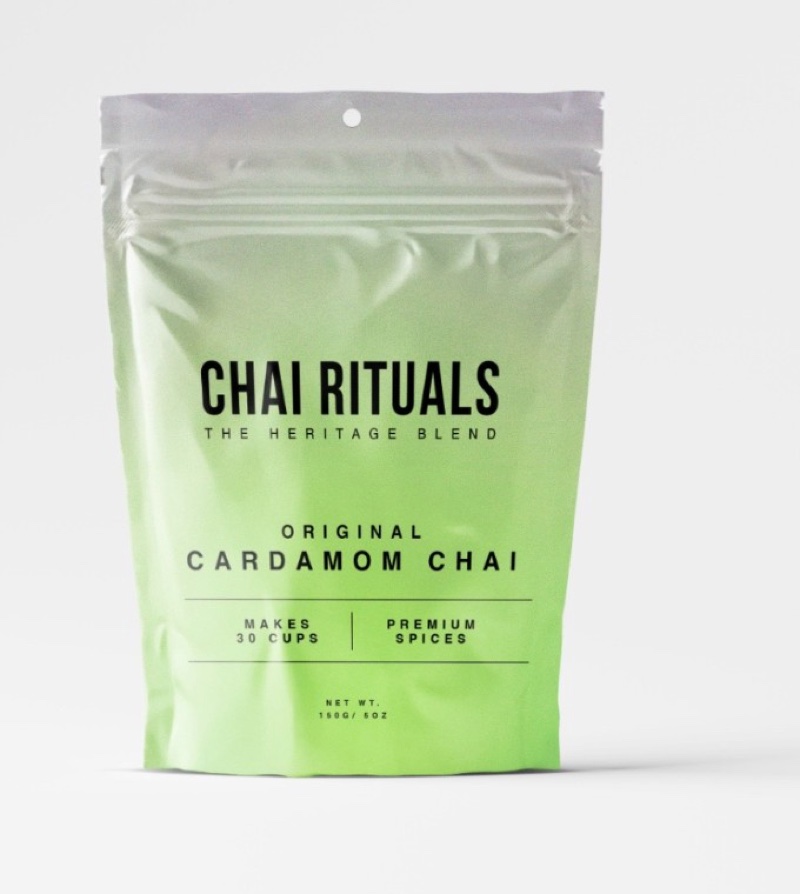
We make both, and people often ask us to choose for them. The honest answer depends on when you drink it.
The difference in one line
Masala chai is a full blend — six spices in balance, no single one in front. Cardamom chai is tea and cardamom alone.
Both come from the same tradition. Cardamom chai is not a different category; it is chai with one spice instead of six — common enough in India to be its own thing.
How they taste
Masala
Layered and warming. The ginger and black pepper give it an edge at the back of the throat, clove gives it depth, cinnamon rounds it. It arrives in stages — aromatic first, then warm, then a lingering heat.
It is the more assertive of the two. It stands up to a heavy milk ratio, to sugar, and to being drunk alongside food.
Cardamom
Brighter, cleaner, more floral. Cardamom's slight citrus quality comes forward in a way it never does in a full masala, and the finish is shorter and less warming.
It is the more delicate of the two, and it shows the tea more. Which also means a rough tea has nowhere to hide.
When to reach for which
- Morning, cold weather, with food → masala. It has the weight to sit alongside breakfast and the heat that makes sense in January.
- Afternoon, evening, on its own → cardamom. Lighter, less warming, easier to drink at four o'clock without it feeling like a meal.
- Iced → cardamom, usually. Cold mutes aromatics, and cardamom's brightness survives it better than clove and pepper do.
- Someone who has never had real chai → masala. It is the reference point, and cardamom chai makes more sense once you know what it is a variation on.
- Someone who finds chai "too much" → cardamom. That reaction is usually clove and pepper, and cardamom chai has neither.
How to brew them
Brew both the same way: one level tablespoon, about 5 g, for every cup. The method printed on the pouch works for either.
It also takes less sugar. Cardamom reads as sweet on its own, so the amount that suits a masala will taste cloying here.
What about ginger chai, karak, Irani chai?
Same principle, different weighting. Ginger chai pushes ginger forward. Karak is the Gulf version — very strong, very sweet, usually with evaporated or condensed milk. Irani chai is a Hyderabadi style, made with a slow-brewed tea decoction and thickened milk and drunk with Osmania biscuits.
None of these is a different drink so much as a different dialect of the same one.
If you can only have one
Masala. It is the broader of the two and the one that works across more of the day. Cardamom chai is the better second pick — the one you reach for when you want the same ritual to feel like a different drink.