The Journal · Craft & method
The six spices in our masala, and what each one is doing
Cardamom, cinnamon, ginger, nutmeg, clove and black pepper. Not a fixed recipe — there is no such thing — but here is what each contributes and how it goes wrong.
By Santhosh Natesan · October 24, 2026 · 3 min read
There is no authoritative masala. Every household has one, they disagree, and the disagreements are regional and generational. What follows is ours — six spices on whole-leaf Assam — and, more usefully, what each is actually doing in the pan.
Cardamom — the one that carries it
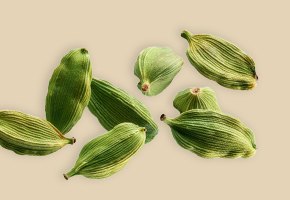
Green cardamom is the spice most people identify as "chai" without knowing its name. It is intensely aromatic, slightly camphorous, faintly citrus, and it dominates the smell of the cup before you taste anything.
It must be cracked. A sealed pod releases very little; the seeds inside are where everything is. Press pods with the flat of a knife before they go in.
Too much tips from aromatic to soapy. It is the easiest spice here to overdo.
Cinnamon — the rounding
Cinnamon fills the space between the tea's tannin and the cardamom's top note. It reads as sweetness without being sweet, which is why chai can take far less sugar than people expect.
Most chai uses cassia rather than true Ceylon cinnamon — it is bolder and stands up to boiling, where Ceylon is more delicate and gets lost. Bark, not powder: powdered cinnamon clouds the cup and turns it slightly gritty.
Ginger — the edge
Ginger provides the heat at the back of the throat. Without it chai is aromatic but soft, and lacks the thing that makes you take a second mouthful quickly.
Dried versus fresh is a real choice. Fresh is brighter and sharper and is what most Indian homes use. Dried is rounder, more persistent, and far more stable in a blend — which is why ours is dried. Fresh ginger can also curdle milk if you boil a lot of it hard.
Clove — the one to be careful with
Clove is powerful and slightly numbing, and it adds a dark, dark, resinous depth underneath everything else. One or two per pot is right. Four and it takes the whole drink over, and there is no rescuing it.
If a chai has ever tasted faintly like a dentist's office to you, it was over-cloved.
Nutmeg — the one you notice by its absence
Nutmeg is the quiet one. On its own it is warm and slightly sweet and does not announce itself. In a blend it sits underneath and gives the finish a roundness that is genuinely hard to name.
Take it out and you may not be able to say what changed, only that something did.
Black pepper — the lift
Pepper adds a clean, dry heat that is different from ginger's — sharper, further forward. It also lifts the other spices; a pot without it tastes slightly flat even when everything else is right.
Cracked coarse rather than ground. Fine pepper disperses too fast and makes the cup harsh.
Why whole, not ground
Ground spice gives up everything in the first thirty seconds and then has nothing left. You get a cup that is loud at the start and hollow by the end, plus sediment.
Whole spice releases across the entire boil, which is why chai is boiled for eight minutes rather than steeped for three. The method and the format depend on each other — whole spices need more than a three-minute steep.
What we do not put in
Star anise, fennel, bay, saffron and rose all appear in regional masalas and all make good chai. They make a different chai. Six is enough for an everyday cup.