
The Journal · Craft & method
Doodh wali chai: the milky chai, and how to make it at home
Doodh wali chai is chai made mostly with milk: thick, sweet and toffee-colored. Where it comes from, how it differs from doodh patti, and how to make one cup.
By San · November 16, 2026 · 5 min read · Jump to recipe
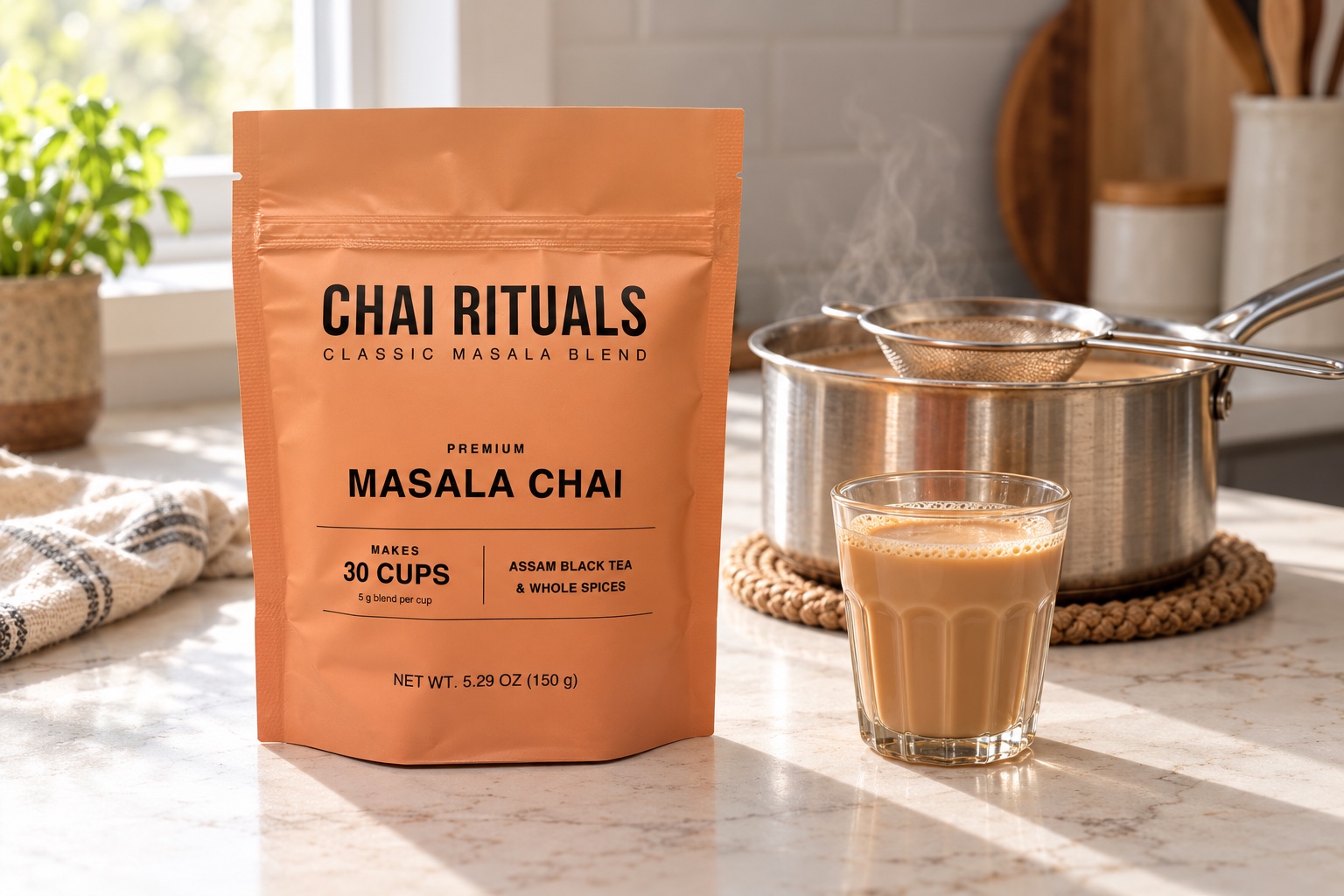
Ask for chai almost anywhere in India and it comes with milk. Some people want more than that: a cup that is mostly milk, thick, sweet and the color of toffee. That is doodh wali chai. Doodh means milk, and doodh wali chai is simply the chai with milk, said the way you would ask for it at a stall or at home.
Where it comes from
Tea was grown in India for export long before most Indians drank it. In the first half of the twentieth century the tea industry set out to change that, with tea stalls at railway stations and free cups handed out in towns. The British way was to steep the leaf in a pot and add a little hot milk and sugar.
The people making chai on the street did it their own way. They boiled the leaf right in the pan with plenty of milk and sugar, often with ginger or cardamom, and used far more milk than the British would have. That boiled, milky cup is the one that stuck, and it is still how chai is made at stalls and in homes across India.
Doodh wali chai, doodh patti and the rest
- Doodh wali chai is chai made milk-heavy: a splash of water to start the tea, then mostly milk.
- Doodh patti means milk and leaf. It has no water at all: the tea is boiled straight in milk. It is especially loved in Pakistan and northern India.
- Kadak chai means strong chai: more tea, boiled harder. Doodh wali chai can be kadak too. The two are not opposites.
- Lal cha, red tea, is what Kolkata calls black tea with no milk. The other end of the scale.
Why it needs a strong tea
Milk mutes tea. The fat coats your tongue and softens the tannin and the aroma, so a delicate tea all but disappears in a milky cup. Doodh wali chai needs a tea that gives up its flavor hard and fast, which is why it is usually made with Assam CTC, the small rolled pellets you see in Indian kitchens. Our pouches are exactly that. There is more on why in our piece on Assam CTC.
Our whole-leaf tube works too. It is gentler, so give it the full two minutes in water before the milk goes in.
How to make doodh wali chai, for one cup
5 g chai · 60 ml (2 oz) water · 180 ml (6 oz) whole milk: one level tablespoon of chai, one part water to three parts milk.
- Start the tea in water. Put the water and one level tablespoon of chai (5 g) in a small pan and bring it to a boil. Let it bubble for about a minute, until it is dark. That little bit of water lets the tea brew before the milk goes in.
- Add the milk and bring it back to a boil.
- Let it rise three times. When it foams up toward the rim, lift the pan off the heat until it settles, then put it back. After the third rise, turn the heat down and let it simmer for two or three minutes more, stirring now and then. This is where it turns thick and toffee-colored.
- Sweeten in the pan with one or two teaspoons of sugar or jaggery, stirred in while it is still on the heat.
- Strain into the cup through a fine strainer.
It takes about ten minutes, a little longer than our everyday chai, because the milk needs the time. For two cups, double everything.
Doodh patti: no water at all
For doodh patti, use 240 ml (8 oz) of whole milk and no water. Put the milk and the chai in the pan together and bring them up slowly over medium heat, stirring so the milk does not catch on the bottom. Once it boils, turn it down and simmer for about five minutes, until it is the color of milky coffee. Sweeten at the end and strain.
Tea gives up its flavor more slowly in milk than in water, which is why it needs the extra time. If it still tastes mild, use a little more chai next time rather than boiling it longer.
Getting it right
- Use whole milk. The point of doodh wali chai is body, and skim milk cannot give it. If you skip dairy, barista oat milk comes closest. Heat it gently, because many oat milks thicken or separate at a hard boil. Every milk, compared.
- Stay with the pan. Milk boils over in seconds once it starts to rise.
- Keep the first boil short. A milky cup gets its strength from enough tea, not from a longer boil. Boil the leaf too long and it turns bitter, and no amount of milk hides that. Here is how to fix bitter chai.
- The skin is normal. Milk that simmers forms a skin, called malai. Some people stir it back in and some lift it off.
Which of ours to use
The Masala Chai pouch makes the classic: Assam CTC with cinnamon, cardamom, ginger, nutmeg, clove and black pepper. The Cardamom Chai pouch is tea and cardamom only, for a milky cup that tastes of cardamom and nothing else. Each is 150 g, which is 30 cups at 5 g a cup.
If you like it less milky, our water-to-milk ratio guide covers the other end of the scale.
Recipe card
Doodh wali chai
Steep it · about 7 minutes
The quick way.
Ingredients
- 1 level tablespoon (5 g) masala chai
- 60 ml (2 oz) water, just boiled
- 180 ml (6 oz) whole milk
- Sugar or jaggery, to taste (optional)
Method
- Put the chai in a mug, pour the just-boiled water over it, cover and steep for 5 minutes.
- At the same time, heat the milk in a small pan until it steams.
- Strain the chai into your cup.
- Froth the hot milk for about 20 seconds.
- Pour the milk into the chai.
- Add sugar to taste.
- Enjoy.
On the stove · about 10 minutes
If you have more time. Boiling draws the most out of the spices.
Ingredients
- 1 level tablespoon (5 g) masala chai
- 60 ml (2 oz) water
- 180 ml (6 oz) whole milk
- 1–2 teaspoons sugar or jaggery (optional)
Method
- Put the water and chai in a small pan, bring to a boil and let it bubble for about a minute, until dark.
- Add the milk and bring it back to a boil.
- When it foams up toward the rim, lift the pan off the heat until it settles, then put it back. Do this three times.
- Turn the heat down and simmer for two or three minutes more, stirring now and then, until thick and toffee-colored.
- Stir in the sugar while the pan is still on the heat.
- Strain into your cup through a fine strainer.
Notes
- The stove method is the real doodh wali chai: the milk boils with the tea until it is thick and toffee-colored. Steeping gives a quicker, lighter milky cup.
Chai Rituals · chairituals.co/journal/doodh-wali-chai