The Journal · Convenience & concentrate
Why chai is made with Assam CTC, not the tea you would drink plain
CTC is crushed, torn and curled — a leaf processed for strength rather than subtlety. It is what most chai in India is made from, and there are good reasons for that.
By Santhosh Natesan · October 24, 2026 · 3 min read
If you buy tea from a specialist, you are shown whole leaves and told, correctly, that they are the good stuff. Then you go to India and the chai — which is better than anything you make at home — is made from what looks like coarse brown granules.
That is CTC, and it is not a lesser tea. It is a different tool.
What CTC means
Crush, Tear, Curl. The leaf is passed through cylindrical rollers with hundreds of small teeth, which shred it and roll it into hard pellets rather than the twisted whole leaf of orthodox processing. The method dates to the 1930s in Assam.
The result is a leaf with enormous surface area relative to its weight, which changes everything about how it behaves in a pan.
Why it suits chai
It survives milk
Milk fat coats the tongue and mutes tannins and aromatics. A delicate tea disappears entirely under it. CTC extracts hard and fast enough that there is still tea to taste after 200 ml of whole milk has gone in.
It survives a boil
Chai is boiled, not steeped. Most fine teas are ruined by that — the compounds that make them interesting are also the ones that turn harsh under sustained heat. CTC is made for exactly this treatment.
It is fast
All that surface area means color and strength in two minutes rather than five. On a street stall making hundreds of cups, that is the difference between a business and a queue.
It is consistent
Whole leaf varies by garden, by flush, by year. CTC is far more uniform, which matters when the drink is a daily habit rather than an occasion.
Where whole leaf wins
Everywhere else. A whole-leaf Assam has a complexity CTC does not — more aromatic range, a longer finish, more to notice. It extracts more slowly, which gives you a wider margin before bitterness. If you are paying attention to the cup rather than drinking it on the way out the door, whole leaf is the better experience.
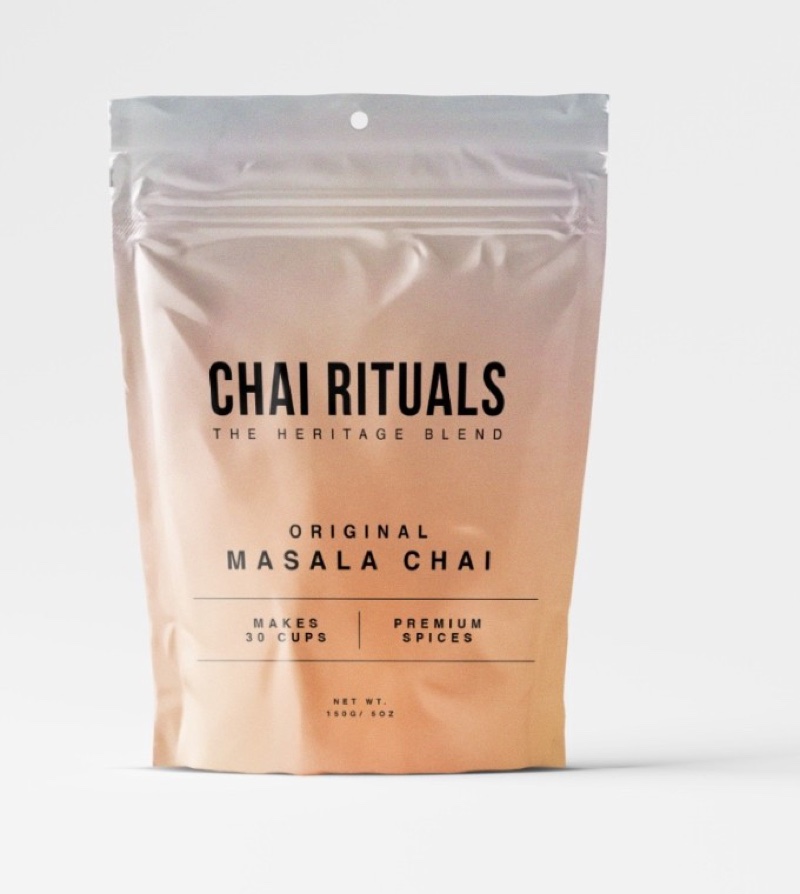
This is genuinely why we make both. Our tube is whole-leaf Assam, for the cup you sit down with. Our pouches, coming soon, are Assam CTC, for the cup you make at speed on a Tuesday. The tube and the Masala pouch carry the same six spices.
Dosing them differently
CTC gives up more, faster, so the same weight makes a stronger cup in less time.
- Whole leaf: 10 g for two cups, two minutes in water before the milk.
- CTC: the same 10 g for two cups, but a shorter simmer — ninety seconds to two minutes. Push it to four minutes and it turns bitter faster than whole leaf will.
If you have been using CTC at whole-leaf timings and wondering why your chai is harsh, that is the answer.
What CTC is not
It is not dust. Bagged tea is generally fannings and dust — the smallest fragments left after sorting, often from CTC production — which is a grade, not a process. CTC is a deliberate manufacturing method producing a specific, uniform pellet. The two get conflated constantly.