The Journal · Craft & method
The chai to water to milk ratio, and how to find yours
One to one is where to start. Then adjust in one direction at a time — and know which lever changes what, so you are not guessing.
By Santhosh Natesan · October 24, 2026 · 3 min read
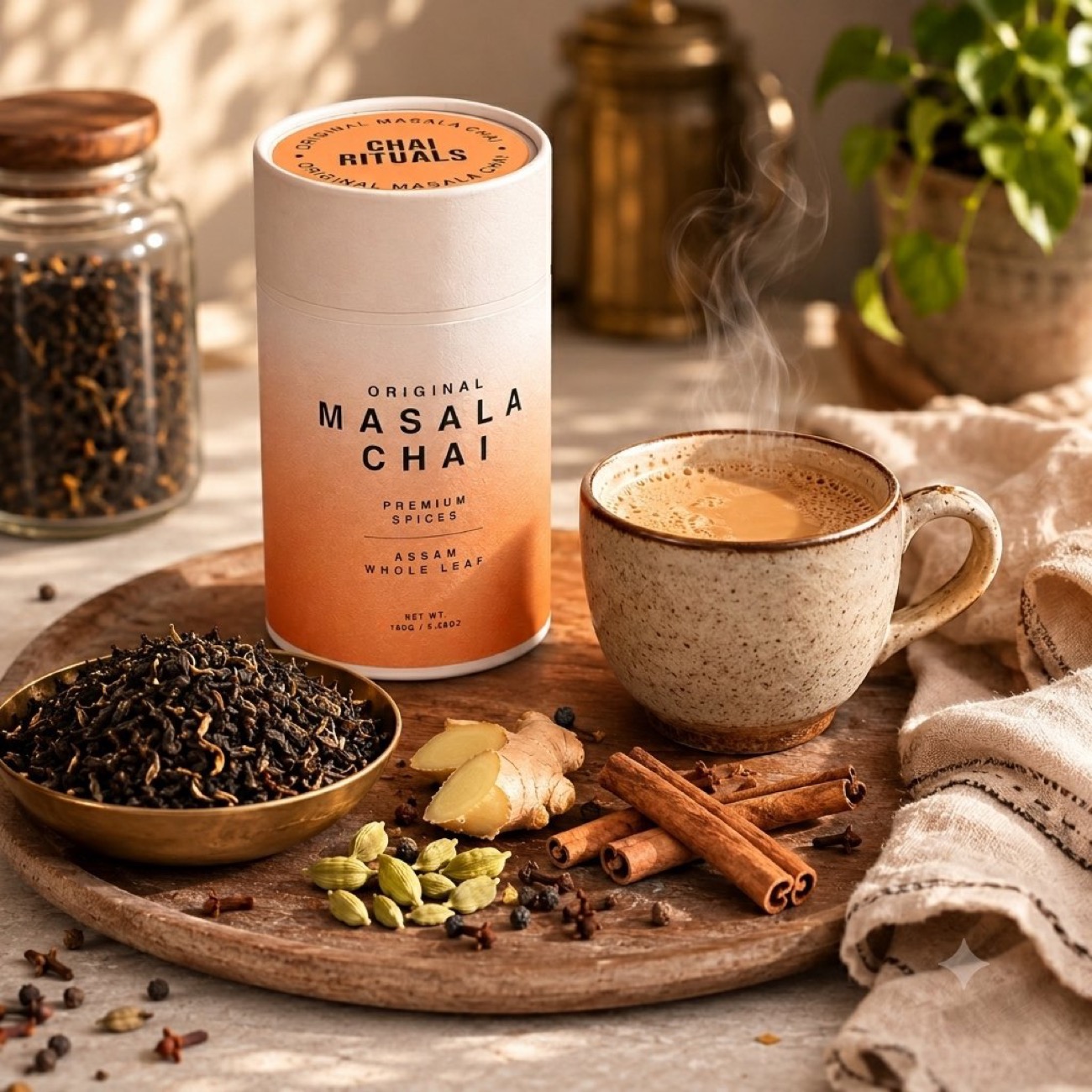
There is no single correct ratio, which is why searching for one is frustrating. What exists is a reliable starting point and a small number of levers, each of which changes one thing.
Start here
10 g leaf · 200 ml water · 200 ml milk — two level tablespoons, equal parts water and milk, makes two cups.
Equal water and milk is a common ratio in Indian home kitchens. It is strong enough to taste like tea and rich enough to feel like chai. If you make it once this way and it is nearly right, adjust from here rather than starting over.
The four levers
Leaf changes strength
More leaf makes a stronger, more tannic cup. This is the lever most people should reach for first, and the one they reach for last. If your chai tastes weak, it is almost always underdosed rather than underboiled.
Milk ratio changes body, not strength
Going to 1 part water and 2 parts milk gives you a rounder, heavier cup that tastes less of tea. Going the other way — 2 water to 1 milk — gives a sharper, more tannic cup closer to how chai is often served on Indian streets.
Whole milk is worth using. Skim milk does not carry spice the same way and gives a thin result no ratio will rescue.
Boil time changes bitterness
Two minutes for the water-and-leaf stage is the sweet spot. Push to four and you will extract tannins that taste harsh. If you want it stronger, use more leaf rather than more time. This is the single most useful thing in this article.
Spice quantity changes aroma
Independent of everything above. With a pre-blended chai you are not adjusting this — but if you want a more aromatic cup, crack one extra cardamom pod into the pan rather than changing the ratios.
Three common preferences
- Strong and dark — 12 g leaf, 250 ml water, 150 ml milk. More tea forward, closer to cutting chai.
- Rich and rounded — 10 g leaf, 150 ml water, 250 ml milk. Softer, more like what a good cafe aims at.
- Even — 10 g, 200 ml, 200 ml. The default, and where to return if an experiment goes wrong.
What a tube gives you
At 5 g a cup, a 150 g tube is 30 cups — fifteen two-cup pots. Useful to know when you are working out whether a heavier dose is worth it: going from 10 g to 12 g a pot takes you from 15 pots to about 12.
Change one thing at a time
The reason people never land on a ratio they like is that they change leaf, milk and boil time all at once, and then cannot tell what did it. Change one. Drink it. Change the next.
Three pots and you will have a ratio that is yours, which is the only one that matters.